Case Study · How Zip Code Targeting Drove Sales Lift
A national consumer goods brand wanted to go beyond awareness, driving shoppers into stores and influencing real purchase behavior at the zip-code level.
The Challenge
A national consumer goods brand was eager to take its campaigns to the next level. While its broad linear TV strategy had already established strong brand awareness and reach, the client wanted to go further—driving shoppers into stores and influencing real purchase behavior.
The big question: How can we get audiences not just to see the ads, but to actually take action at the retail level?
To make that happen, the campaign needed more than just broad coverage. It required a tactic that could pinpoint priority neighborhoods, focus on audiences living near key retail locations, and deliver messaging where it would most likely translate to sales.
That’s where zip code targeting tactics came into play. By layering precision targeting at the zip code level, we were able to narrow in on the client’s audience with greater accuracy and create a clear path from awareness to in-store purchase.
The Solution
We designed a 7-week campaign focused on zip-code targeting in markets anchored by major retailers. To isolate the impact of adding streaming, we divided zip codes into two key groups:
Neighborhoods where audiences were reached across both linear TV and streaming platforms.
Neighborhoods that received only linear TV coverage. By creating a “test and control” environment, we could directly compare performance.
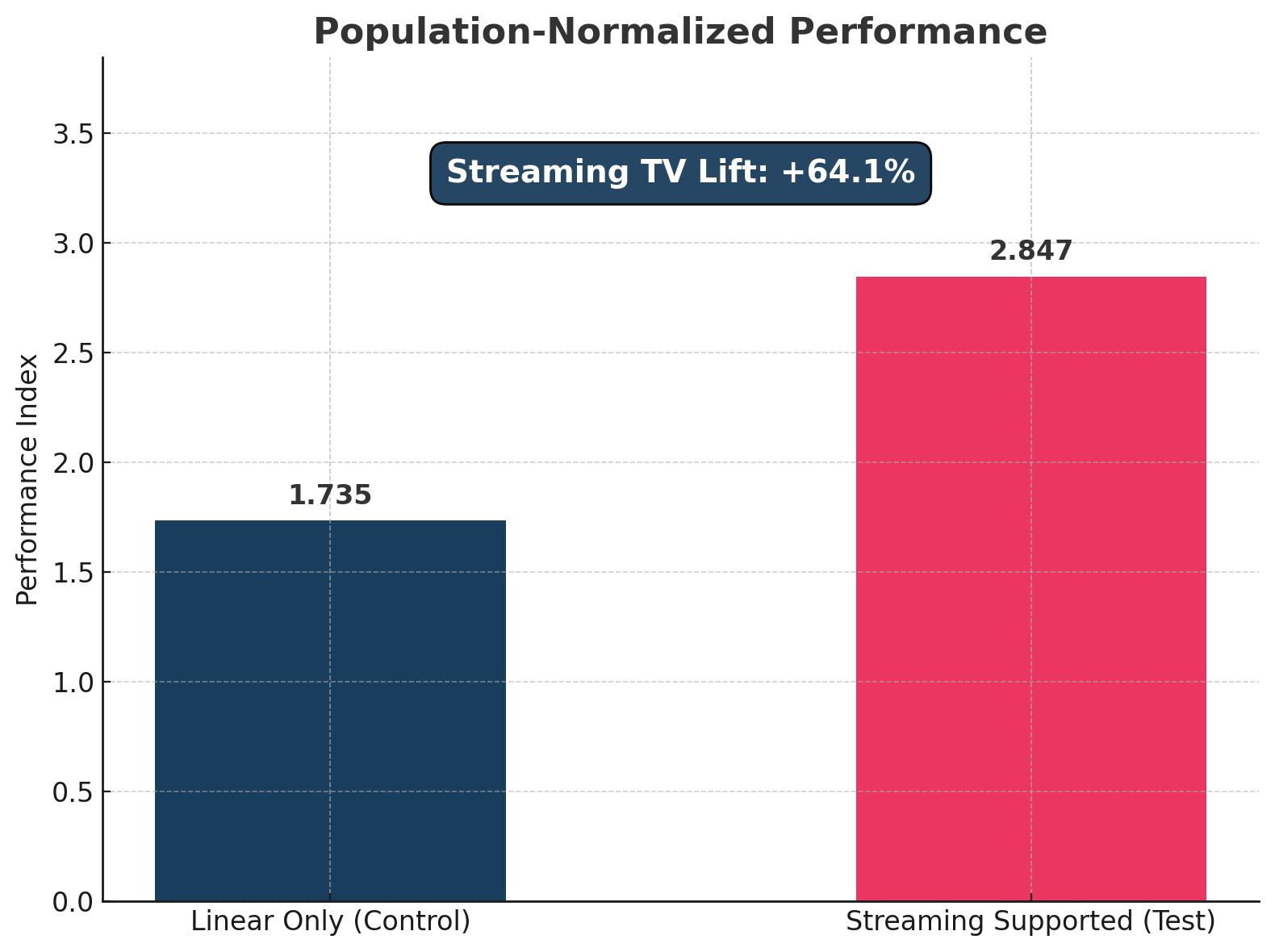
To ensure that the data wasn’t skewed by population differences (since one zip code could have 10,000 residents and another 50,000), we applied Population Normalization—measuring sales per 1,000 residents. This approach gave a true apples-to-apples view of performance and allowed us to clearly see the incremental effect of adding streaming to linear buys.
Measured Results
Streaming + Linear
Units sold per 1,000 residents in zip codes where streaming was layered onto linear TV.
Linear Only
Units sold per 1,000 residents in zip codes that received linear TV coverage alone.
Net Effect
Sales lift in zip codes where streaming was layered into the strategy.
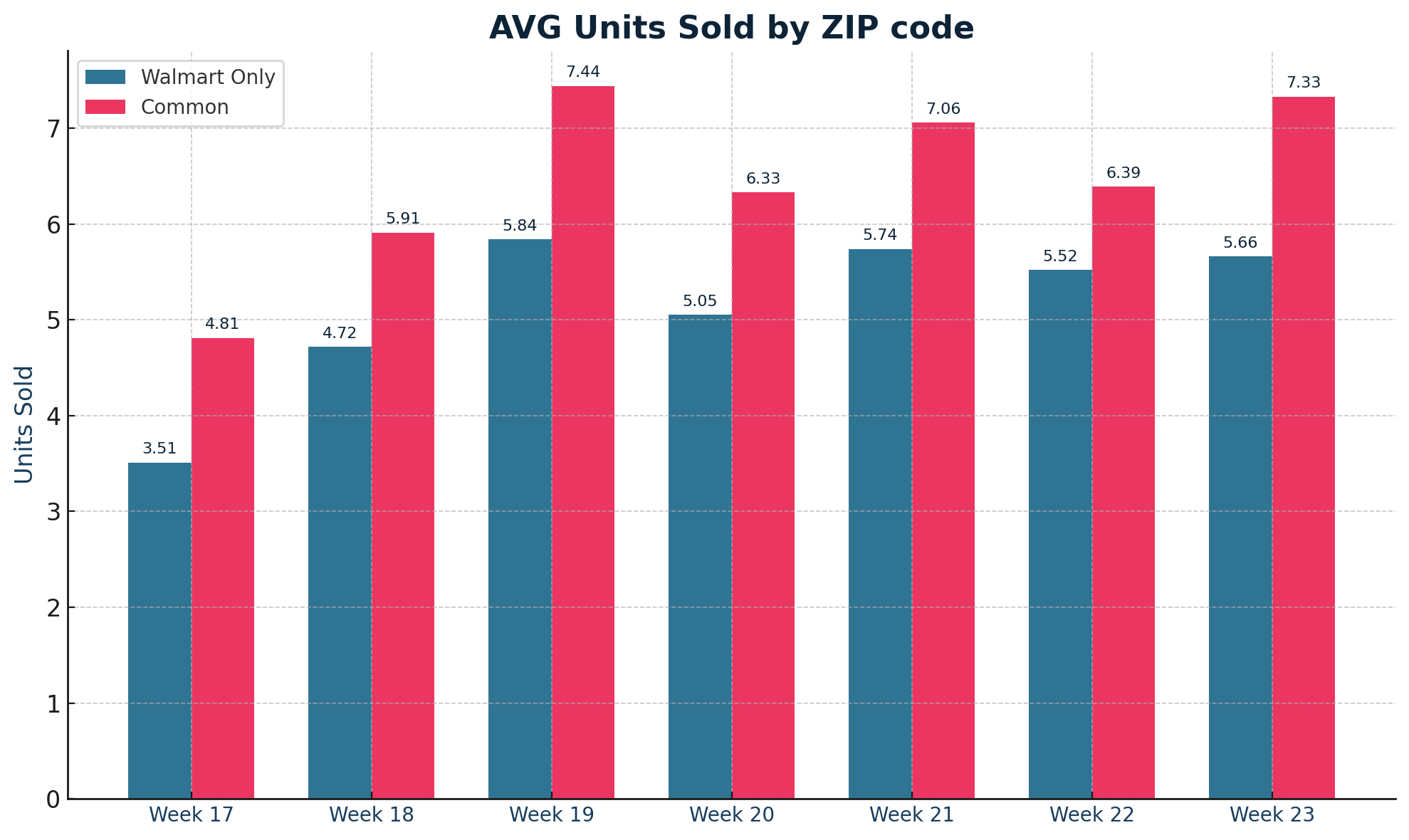
When we removed normalization and compared average units sold per zip code on a direct retailer-to-retailer basis, streaming still proved its strength: 45.27 average units sold across the 64 streaming + linear zip codes versus 36.04 across the 1,052 linear-only zip codes. Even without adjusting for population, zip codes targeted with streaming outperformed those with linear alone.
Why It Worked
Linear established broad brand awareness, while streaming layered in precision. The two tactics reinforced one another, turning exposure into measurable action.
Instead of casting a wide net, we focused on high-value neighborhoods near key retail locations—delivering messages where purchase intent was strongest.
Audiences who saw the brand across multiple platforms were more likely to remember the message and act on it once they were in-store.
By tailoring the media mix at a granular, zip-code level, the campaign felt more relevant to shoppers in their everyday environments, making the path from awareness to purchase shorter and more direct.
The Takeaway
This test showcased how geotargeting strategies unlock measurable lift. By leveraging zip-code level precision, we were able to show that campaigns don’t just need to be big—they need to be smart.
Linear TV continues to deliver unmatched reach, but when paired with localized streaming tactics, the results are undeniable: more sales, stronger ROI, and a clear path forward for brands who want to convert awareness into action at the shelf.
Published case study: diraymedia.com/portfolio/pinpointing-performance-how-geotargeting-drove-sales-lift